
SaaS Is Dying, Data Is Immortal — Why an AI Data Infra Raised $65M Matters
The next decade of AI will be defined by data

More than a year ago, Notion CEO Ivan Zhao made a provocative prediction: the rise of large AI models could unify today’s fragmented information landscape and ultimately bring an end to the era of SaaS proliferation.
As AI—especially in coding—has advanced at breakneck speed, this idea has increasingly become a shared belief across the industry.
Jeff Bezos once famously compared AI to electricity: a horizontal enabling layer that improves everything, integrates into everything, and exists everywhere. “I guarantee you,” he said, “AI will improve anything you can think of.”
That framing is proving prescient.
2026: The Functional Beginning of AGI
In a recent essay titled “2026: This Is AGI,” Sequoia partners Pat Grady and Sonya Huang argue that 2026 will mark the functional birth year of Artificial General Intelligence.
Rather than debating philosophical definitions, they suggest focusing on capability. In their view, AGI simply means AI that can figure things out. That capability rests on three pillars:
Base knowledge, acquired through pretraining
Reasoning, enabled by inference-time compute (e.g. OpenAI’s o1)
Iterative execution, powered by long-horizon agents that can self-correct and complete tasks autonomously
Among these, the most critical trend right now is the rise of long-horizon agents.
These agents represent a fundamental shift: AI is moving from being a speaker to becoming an actor. Between 2023 and 2024, AI was primarily conversational. By 2026–2027, it will behave more like a colleague—capable of executing real work.
Even more striking is the pace of progress. Data shows that AI’s ability to complete long tasks doubles roughly every seven months. By 2028, AI agents are expected to reliably perform an entire day’s worth of expert-level work.
This implies a massive role shift for humans—from individual contributors to managers of agent teams—and opens the door to a new generation of specialized AI agents across every industry.
The Death of Software as We Know It
Doug O’Laughlin’s essay “The Death of Software 2.0” crystallizes what this transition means for software itself.
His core argument: as AI agents—especially tools like Claude Code—become more powerful, the form and value of traditional software will fundamentally change.
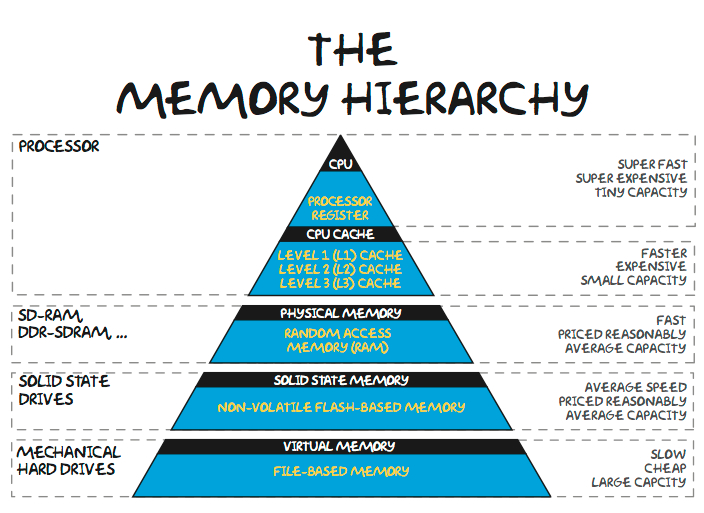
He compares the future software stack to a computer memory hierarchy:
AI agents (e.g. Claude Code) = DRAM
Fast, non-persistent memory. They process information, generate interfaces, and execute workflows. Once the task is done, the cache is cleared.
Traditional software & infrastructure = NAND
Persistent storage. Software becomes the system of record—responsible for security, durability, and structured outputs.
In this model, AI agents and their context windows become the new “fast memory,” while infrastructure software increasingly resembles persistent storage: slower, but far more valuable, accurate, and durable.
Software’s future role is to serve as the single source of truth that AI agents interact with and reason over.
Why Human-Centric Software Is in Trouble
This shift has profound implications.
First, software designed primarily for humans is facing an existential crisis. Horizontal SaaS companies built around human consumption may face extinction-level events. If AI agents can directly operate on data, humans no longer need complex GUIs.
Computation itself becomes ephemeral. Each AI-driven computation is a temporary scratchpad. Only the final output is written back to slow, persistent memory.
Metrics we once cared about—faster workflows, prettier UI, smoother integrations—will steadily lose value.
What rises instead is the API. Software must transition from serving humans to serving AI agents. Interfaces that expose persistent, reliable information become the most valuable assets.
O’Laughlin often says Claude Code is a “ChatGPT moment” you have to experience firsthand. One day, its successor will provide everyone with a superhuman interface. If tokens are TCP/IP, then Claude Code is the first real website of the AI era—and it will disrupt a huge portion of the software industry.
Data Becomes the Ultimate Bottleneck
I’ve already felt this shift firsthand by watching the rapid growth of products built for AI, not humans. When software pivots toward AI-native use cases, data becomes the most valuable foundation, especially real, domain-specific, non-public data.
Authenticity Verification itself is now a big business. As the 3 AI startups shown in my previous post.
This is where a new kind of infrastructure company enters the picture—one that raised $65 million in under two years by tackling what may be AI’s most critical constraint:
