
Deel hit $1.4B ARR in 7 years, AI SEO Bootstrapped to $5M ARR in a year
When the interface changes, distribution resets

Deel hit $1.4B ARR
In an era where most startups trade profitability for growth, Deel has quietly done both.
Founded in 2019 by Alex Bouaziz, the global payroll and HR infrastructure company has scaled to $1.4B in ARR in under seven years, reached a $17.3B valuation, and—perhaps most unusually—remained profitable for three consecutive years.
Today, Deel serves over 40,000 customers, ranging from early-stage startups to companies like Shopify and Coinbase, as well as enterprises in industries like aviation, oil & gas, and luxury.
So how did Deel pull this off?
1. Capital efficiency as a strategy
From the very beginning, Deel operated with extreme financial discipline. At one point after raising its Series A, the company had $4M in the bank—but had only spent a few hundred thousand dollars.
This restraint created leverage. Instead of raising capital out of necessity, Deel raised when it didn’t need to—allowing it to choose long-term partners like Ribbit Capital, Coatue, and Andreessen Horowitz on its own terms.
The philosophy is simple: fundraising is selling part of your company—timing matters.
2. M&A as a growth engine
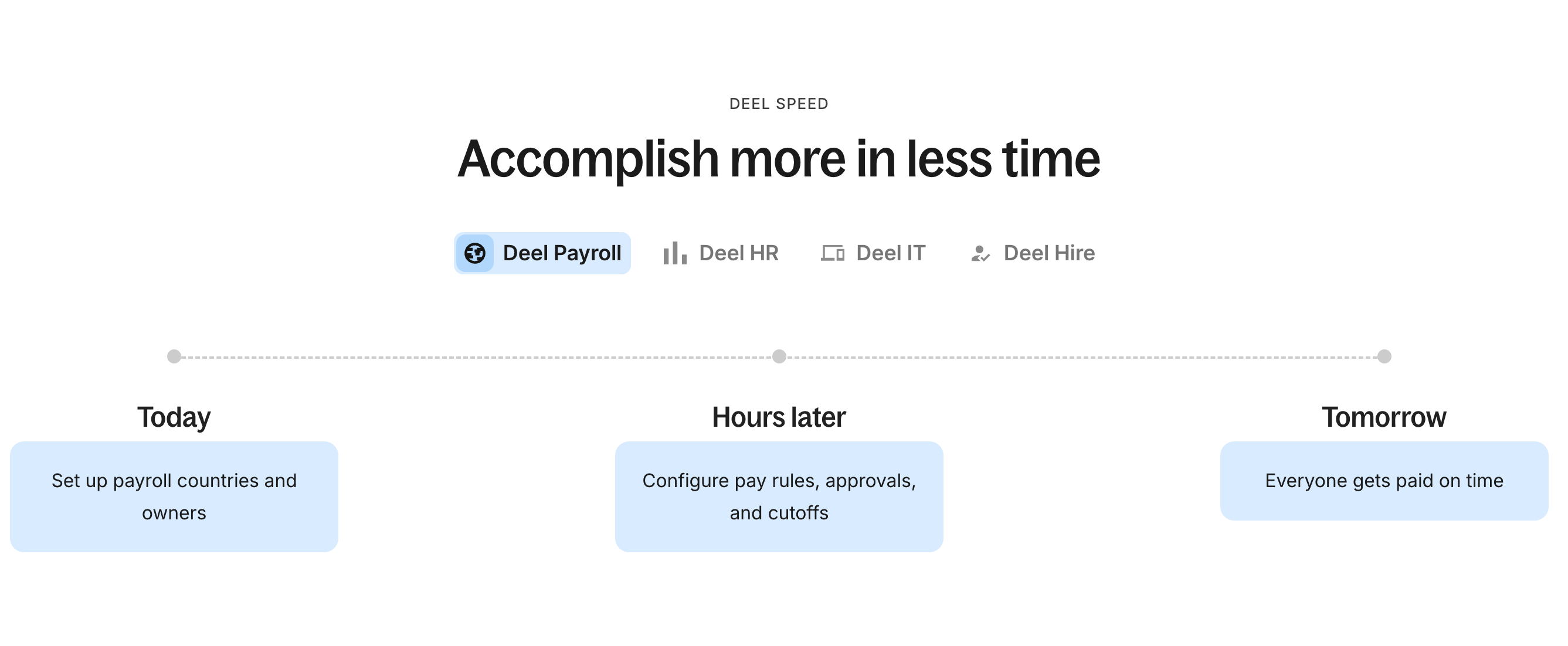
While many companies struggle with post-acquisition integration, Deel has turned M&A into a repeatable system.
Instead of rebuilding acquired products before selling them, Deel does the opposite:
Ship a V0 version within the first month
Train the sales team immediately
Rebuild the backend over the following year
This “front-end first” approach compresses time-to-market by nearly a year and turns acquisitions into instant revenue contributors—not long-term projects.
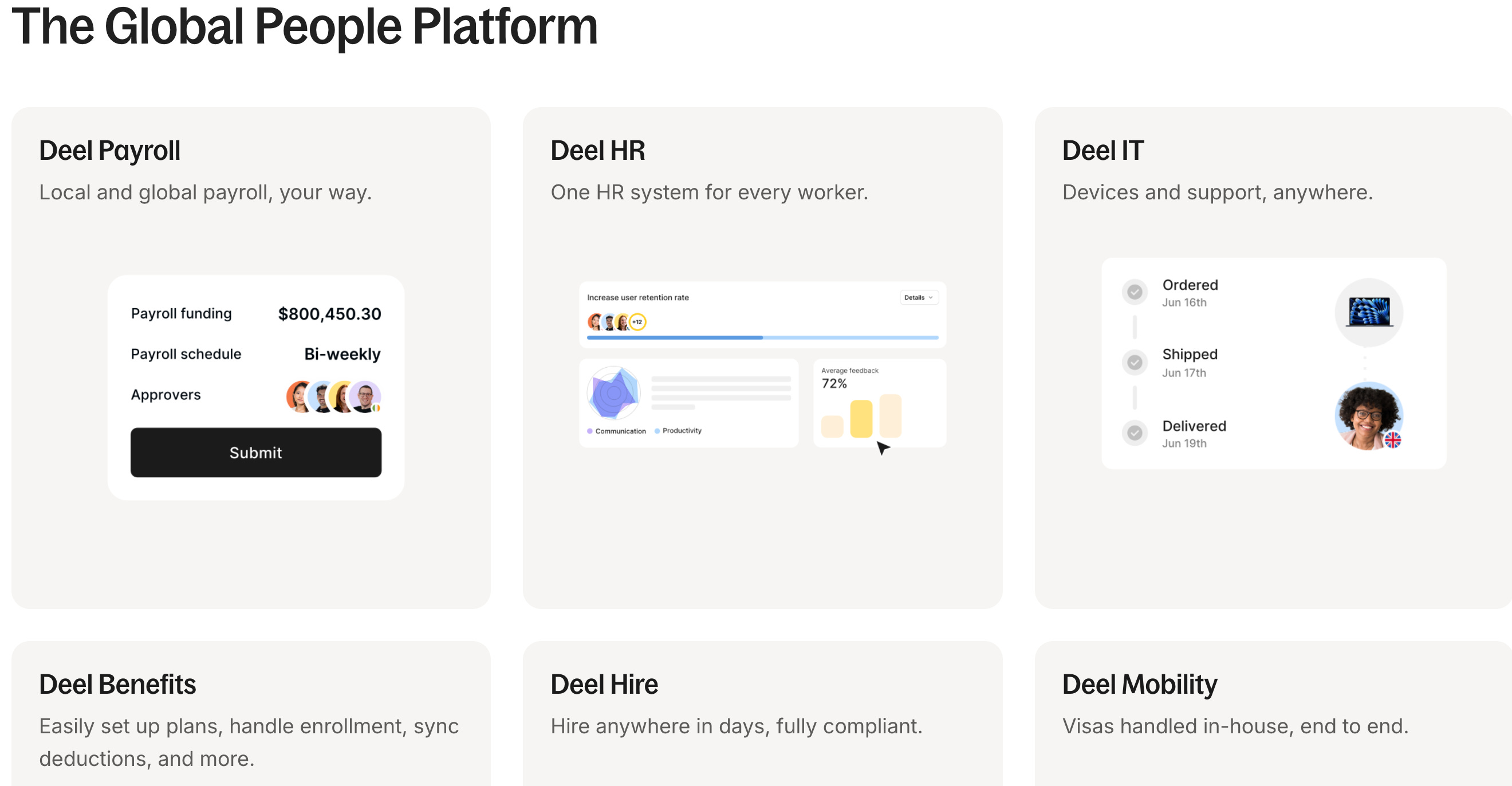
More importantly, Deel doesn’t acquire for revenue. It acquires capabilities—like local payroll engines or new HR modules—and plugs them into a growing product ecosystem that now spans over a dozen tools.
3. A global-first operating system
Deel’s moat isn’t just software—it’s infrastructure.
The company operates entities in 120+ countries, enabling it to offer a full-stack solution: hiring, payroll, compliance, and even IT management. This regulatory depth is hard to replicate and becomes stronger with scale.
Internally, Deel runs a fully remote team of 7,000 employees across 120+ countries—and uses its own product to pay them. This “Deel on Deel” approach creates a powerful feedback loop, where the company continuously stress-tests and improves its own system.
4. Betting on the future of work (and AI)
Rather than seeing AI as a threat, Deel sees it as a tailwind.
Alex Bouaziz believes AI will reduce repetitive jobs—but dramatically increase the number of companies. In that world, Deel’s role expands:
Not just paying humans, but potentially managing compensation and performance for autonomous agents.
It’s a subtle but important shift—from HR software to global labor infrastructure.
Deel’s rise isn’t just a story about remote work tailwinds. It’s a case study in operational rigor:
Stay lean to maintain control
Use M&A as a capability accelerator
Build deep, hard-to-replicate infrastructure
Align with long-term shifts like AI and global work
From an “outsider” startup to a category leader, Deel proves that in complex, regulated markets, execution—not hype—is the ultimate advantage.
AI SEO Bootstrapped to $5M ARR in a year
With the explosion of AI, AI SEO(aka GEO) is one of the fastest-growing categories. I tracked some AI SEO startups that are growing fast and backed by VC.
Such as Brand Radar from Ahrefs is reportedly adding $1M ARR every two weeks. Profound and others were heavily attracted to VC funding.

Now, a new AI SEO startup just crossed $5M ARR, fully bootstrapped in roughly a year. But the number wasn’t the story. The story was the transformation: from a niche Reddit marketing tool into a platform redefining how brands show up inside AI answers.
