
Under Pressure from Anthropic, OpenAI Bets on a Super App
OpenAI Is Building the AI Operating System for Your Desktop

Facing increasing pressure from Anthropic and the internal drag caused by scattered resources, OpenAI is reportedly planning to consolidate its fragmented ecosystem—including ChatGPT, its coding platform Codex, and even the browser—into a unified desktop-level super app.
Over the past year, OpenAI’s product lineup has become increasingly fragmented. From the video generation tool Sora, to various experimental hardware efforts, to the split between web and desktop experiences—this dispersion has created two critical issues:
Internal inefficiency (“side quests”):
Teams have been spread thin across too many parallel initiatives. In an internal memo, Chief Applications Officer Fidji Simo noted that this fragmentation has lowered the overall quality bar.
Broken user experience:
Developers write code in Codex, knowledge workers draft content in ChatGPT, and research still requires jumping back into the browser. In enterprise environments where efficiency is everything, this context-switching cost is unacceptable.
OpenAI Superapp: All-in-One
The core idea behind the super app is simple: All-in-One. OpenAI wants to unify the entry point so its research and product teams can focus on optimizing a single core experience—rather than juggling a dozen disconnected apps.
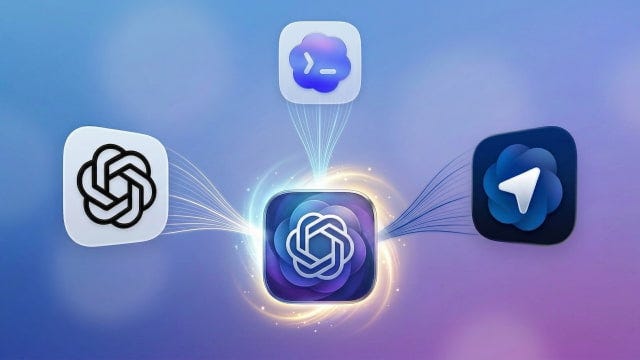
The real breakthrough, however, lies in its agentic capabilities—a shift from “chat interface” to “autonomous agent.” Traditional AI works like this: you ask, it answers. The super app aims for something more powerful: you give instructions, and it executes.
Autonomy: The app will be able to take actions directly on a user’s computer.
Closed-loop execution: It won’t just write code—it will run it, debug it, and even perform financial analysis or document processing using real-time data gathered from the browser.
Reinventing Codex: OpenAI plans to first embed agent capabilities into Codex, expanding it beyond programming into general office workflows—before fully merging it with ChatGPT and the browser.
The underlying logic is clear: whoever controls the desktop layer becomes the operating system of the AI era.
This strategic shift also carries a strong defensive undertone.
First, there’s the aggressive push from Anthropic. With highly focused, productivity-driven tools like Claude Code and Cowork, Anthropic has built strong momentum among developers and enterprise users.
Second, there’s a race for execution speed. While OpenAI has been investing in projects like Sora—which some internally view as costly experiments—Anthropic has been embedding itself directly into core enterprise workflows. According to Simo, OpenAI has realized that spreading effort across too many products and stacks has slowed them down and made it harder to meet quality expectations.
In recent weeks, top executives—including CEO Sam Altman, Chief Research Officer Mark Chen, and Simo—have been reviewing OpenAI’s product portfolio and reassessing priorities. At a recent all-hands meeting, Simo reportedly described the company as operating in a “Code Red” state, underscoring the urgency of the situation.
Still, building a super app is far from easy. OpenAI faces three major challenges:
Organizational complexity:
After a year of rapid expansion and multiple parallel product lines, consolidating everything under a more unified structure—led by Simo and Greg Brockman—will require strong execution.
Commercial and IPO pressure:
Both OpenAI and Anthropic are rumored to be preparing for potential IPOs as early as this year. The super app must quickly prove its revenue-generating power to satisfy investor expectations.
Security and privacy:
An AI agent capable of operating your computer, browsing the web, and reading/writing files raises fundamental concerns. Defining the security boundaries of such a system will be critical for both users and regulators.
According to OpenAI’s latest data, Codex has already surpassed 2 million weekly active users. Since the launch of GPT-5.3-Codex in early February, its user base has more than tripled. Desktop app downloads have exceeded 1 million, and token usage has grown roughly fivefold this year.
M&A for the Superapp strategy
To support this strategy, OpenAI has also announced the acquisition of Astral, aiming to deepen its integration into the developer toolchain and achieve a true end-to-end engineering loop—while directly competing with Anthropic in AI-powered coding.
Astral isn’t an AI company—it’s a high-performance developer tools powerhouse. OpenAI is particularly interested in its three dominant open-source products:
uv: An ultra-fast Python package and project manager that solves the long-standing pain of environment management.
Ruff: A Rust-based Python linter that runs 10–100x faster than alternatives and has become a modern standard.
ty: A tool focused on type safety, improving maintainability for large codebases.
The goal is clear: embed AI directly into compiler-level workflows. With Astral, Codex can evolve from simply writing code to autonomously managing environments, running and debugging programs, and validating code quality. Only by mastering these underlying tools can AI agents behave like real programmers—executing end-to-end tasks on local machines.
Beyond Astral, OpenAI has also acquired Promptfoo and Torch.
Promptfoo specializes in AI evaluation and red teaming, with a strong enterprise customer base—including many Fortune 500 companies. Its core asset is a mature suite of evaluation tools and a widely adopted open-source CLI designed to uncover vulnerabilities in AI systems.
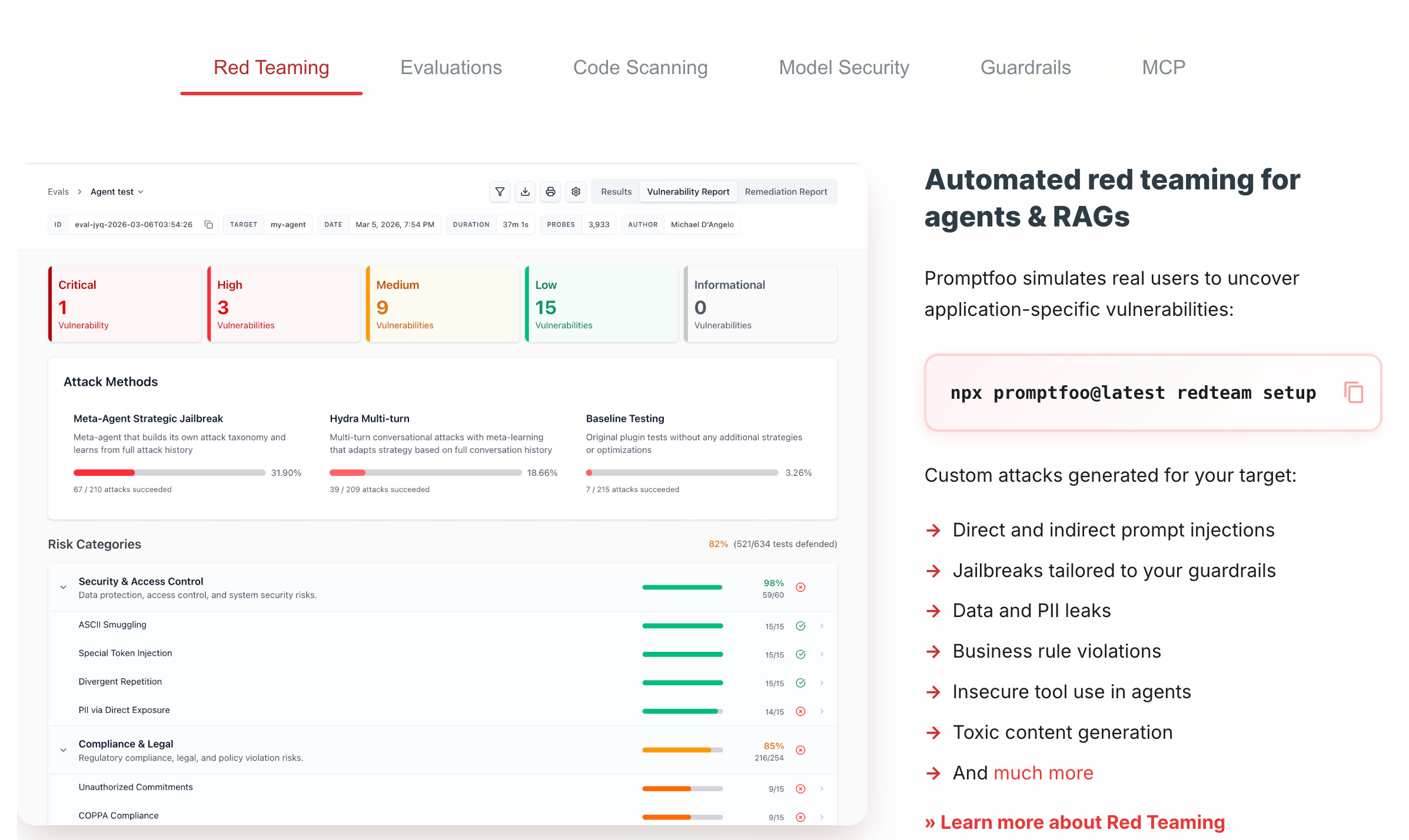
This will strengthen OpenAI’s Frontier platform—its environment for building AI agents—by embedding security directly into the development lifecycle.
As agents gain more permissions (such as operating user machines), managing risks like prompt injection, data leakage, and tool misuse becomes critical. Promptfoo also provides auditable reports, addressing enterprise concerns around governance and compliance.
Torch, on the other hand, focuses on data retrieval and indexing optimization. Its technology enables large language models to extract information from massive unstructured datasets more accurately and efficiently.
For a super app that needs to understand local files, emails, and enterprise databases, Torch provides the necessary indexing layer—ensuring low-latency responses and reducing hallucinations.
If Astral provides the “hands” (execution), then Torch provides the “eyes”—helping AI understand the user’s entire working environment. Meanwhile, Promptfoo acts as the “safety system,” ensuring that increasingly powerful agents remain controllable.
Together, these pieces form the foundation of OpenAI’s next move: not just a better chatbot, but a true AI operating layer for the desktop.