
Manus hit $90M ARRR in 5 months, Sequoia China led Eight Sleep's $100M series D
From “Brains” to “Actionable AI”

In March, Manus launched its product, hit 2 million waitlists in 7 days and by April, it had closed a Benchmark-led investment round at a $500 million valuation.

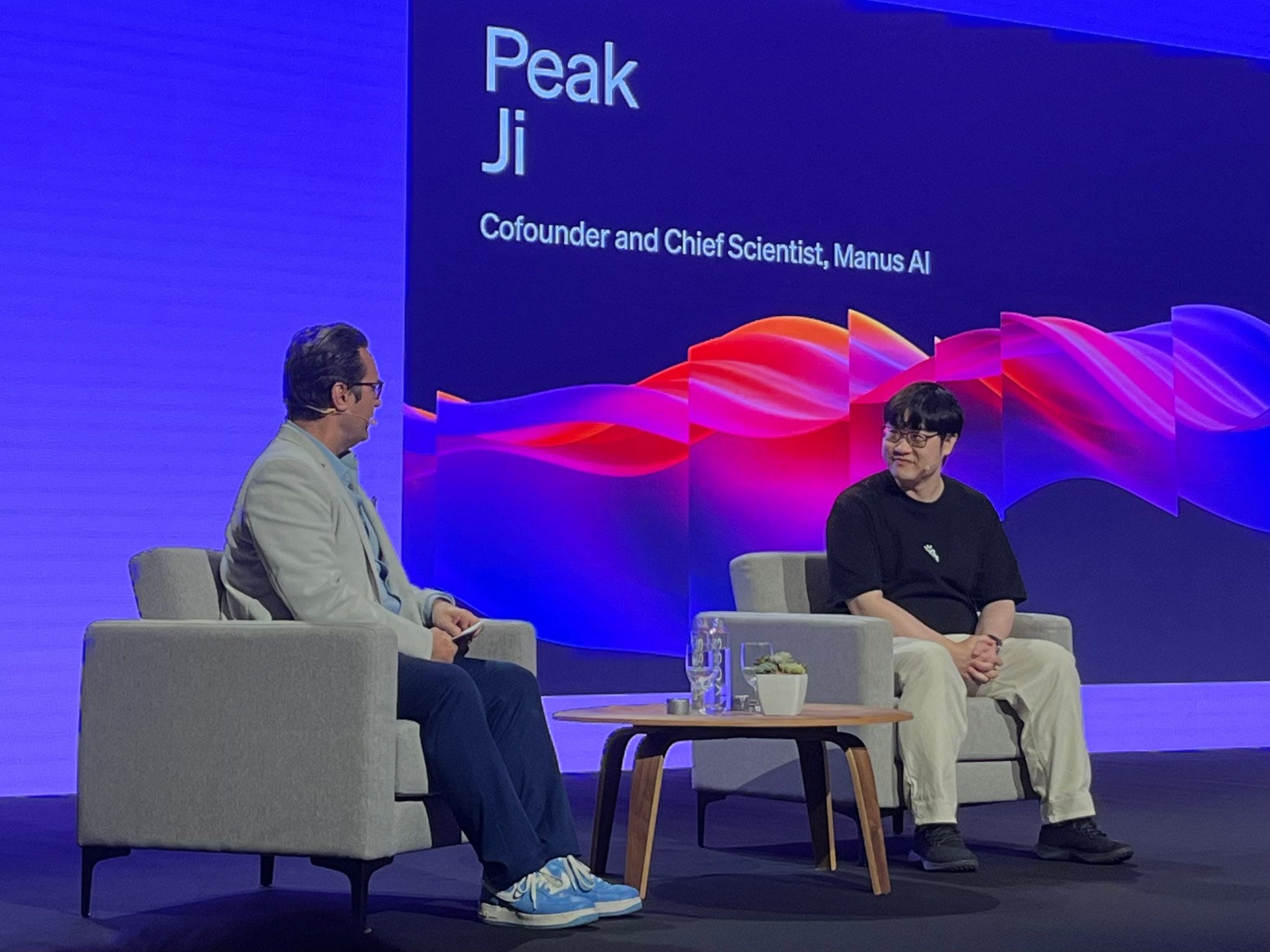
Today, at the Stripe Tour event in Singapore, Manus co-founder Peak shared the company’s revenue numbers.
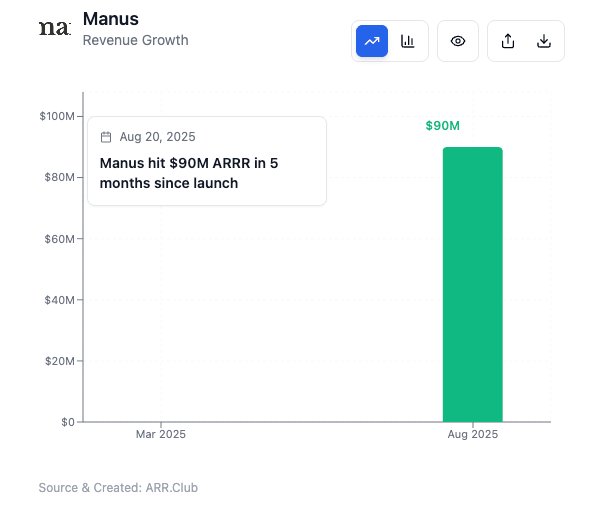
According to Peak, Manus’ annual revenue run rate(ARRR) has already surpassed $90 million and is on track to hit $100 million soon.
Co-founder Red explained that the reason they use Revenue Run Rate is because it’s a rigorous financial metric with a straightforward calculation: monthly revenue × 12.
It’s important to note that revenue is not the same as cash income. Many AI products offer annual payment options, and those prepayments should be treated as deposits rather than revenue. If disclosed in this incorrect way, the figure could exceed $120 million. (To clarify again: this is not the right calculation.)
Another common pitfall is in calculating ARR. A typical mistake, especially early on, is to take 7 days of cash income × 52. This has two issues: (1) as mentioned, it includes annual prepayments, which can massively inflate the numbers, and (2) at product launch, hype and early adopters often lead to over-optimistic projections.
The simplest and most reliable way to check a company’s ARR: open Stripe, find the MRR, multiply by 12. That gives you the globally recognized ARR figure—not a “vibe ARR.”
Congrats to Manus! Personally, I’m increasingly inclined to interpret most publicly disclosed ARR as Annual Random Revenue.
In the AI era, retention is a huge challenge, and truly strong recurring revenue is rare. Still, ARR can be a useful short-term trend indicator.
Peak shared his views on AI Agents, the journey of Manus, and his reflections on AI and the future of work.
From “Brains” to “Actionable AI”
Many research labs and companies are trying to build a brain—a large language model. But from the consumer’s perspective, that’s not enough. AI should be able to actually take action and get things done.
This is the founding vision of Manus: to give AI the ability to use a computer. Just as humans can accomplish nearly any task through a computer, AI with access to a computer can truly help users carry out real-world tasks—from creating presentations and planning trips to managing social media.
Since its launch in March, Manus’ annualized revenue run rate has surpassed $90 million, soon to reach $100 million. “This shows that AI Agents are no longer just a buzzword in research, but something that’s being applied and taking root in the real world.”
Agents vs. AGI
With the AI boom, terms like Agent and AGI have become frequent topics. Peak emphasized:
The essence of an Agent lies in three elements: the user, the model, and the environment. Unlike chatbots such as ChatGPT or generative tools like MidJourney, Agents can interact with their environment and take action.
AGI, on the other hand, refers to a system with general-purpose intelligence that can perform a wide range of tasks without task-specific design.
“In our view, Agent coding is one path toward AGI. If you give AI a computer, it can accomplish almost anything on that computer.”
The Role and Limitations of Today’s AI
Peak believes today’s flagship models already have superhuman-level capabilities, surpassing most people in math and logical reasoning. But they remain like “brains in a jar”—their true potential can’t be unlocked without interacting with the real world.
In practice, the challenges AI faces are often not technical but institutional and ecosystem-related. For example:
Many digital products lack APIs or open interfaces;
CAPTCHA and similar mechanisms block Agent automation;
The digital world is still fundamentally designed for humans, not for Agents.
“So I think AI performs well on self-contained tasks, but to reach its iPhone moment, the ecosystem needs gradual evolution and infrastructure support—for example, Stripe’s Agentic Payments API.”
User Cases and Long-tail Value
Manus users are already demonstrating diverse applications. For example, real estate agents in Singapore use Manus to analyze geography and workforce needs to recommend housing to clients. These long-tail needs don’t have specialized AI products, but general-purpose Agents can serve them well.
Peak also shared two directions of improvement:
Scale — Manus launched Wide Research, a feature that allows one Agent to spawn hundreds of parallel Agents to complete tasks, particularly useful for large-scale research.
Flexibility — Agents should not be confined to preset tools but should instead leverage the entire open-source ecosystem like programmers do.
A typical example is data visualization: users in Asia often encounter font errors with Chinese or Korean. Traditionally, developers would hard-code rules. Instead, Manus enables Agents to see images directly; the model inspects the output and corrects errors automatically. “Flexibility of tools is more powerful than rules.”
Applications in Medical Research
Beyond everyday tasks, Manus is also proving valuable in medical research.
“Many research tools ultimately just give you a markdown file or a document. That’s far from enough. Researchers need deliverables they can directly use.”
Manus has therefore strengthened its reporting capabilities, supporting outputs like slide decks and websites—allowing research to move seamlessly from data to delivery, all within a single context.
AI and the Future of Work
When asked if AI would replace jobs, Peak replied:
“At first we thought Manus would save people time, maybe even help them make easy money. But in reality, once users became more productive, they ended up working even more. They’re able to do more of what they’re good at.”
He sees Manus opening up a new possibility: turning AI into a personal cloud computing platform. In the past, only engineers could harness the power of cloud computing; now, knowledge workers can instruct AI through natural language to execute complex tasks.
As for replacement, Peak said AI will struggle to fully replace humans. For instance, real estate agents can rely on Manus for analytics and data tasks, but client interactions and trust-building remain irreplaceable. “Trust can’t be outsourced to AI.”
Eight Sleep is doing the OS for sleep
To my surprise, HSG(Sequoia China) led the series D round for Eight Sleep—the smart mattress company I’ve always liked, known for combining software and AI to monitor and improve sleep.
Its flagship product, the Pod, measures sleep stages, heart rate, breathing patterns, and movement. Using this data, it automatically adjusts temperature, height, and firmness. It can even detect snoring and raise the bed base to address it.
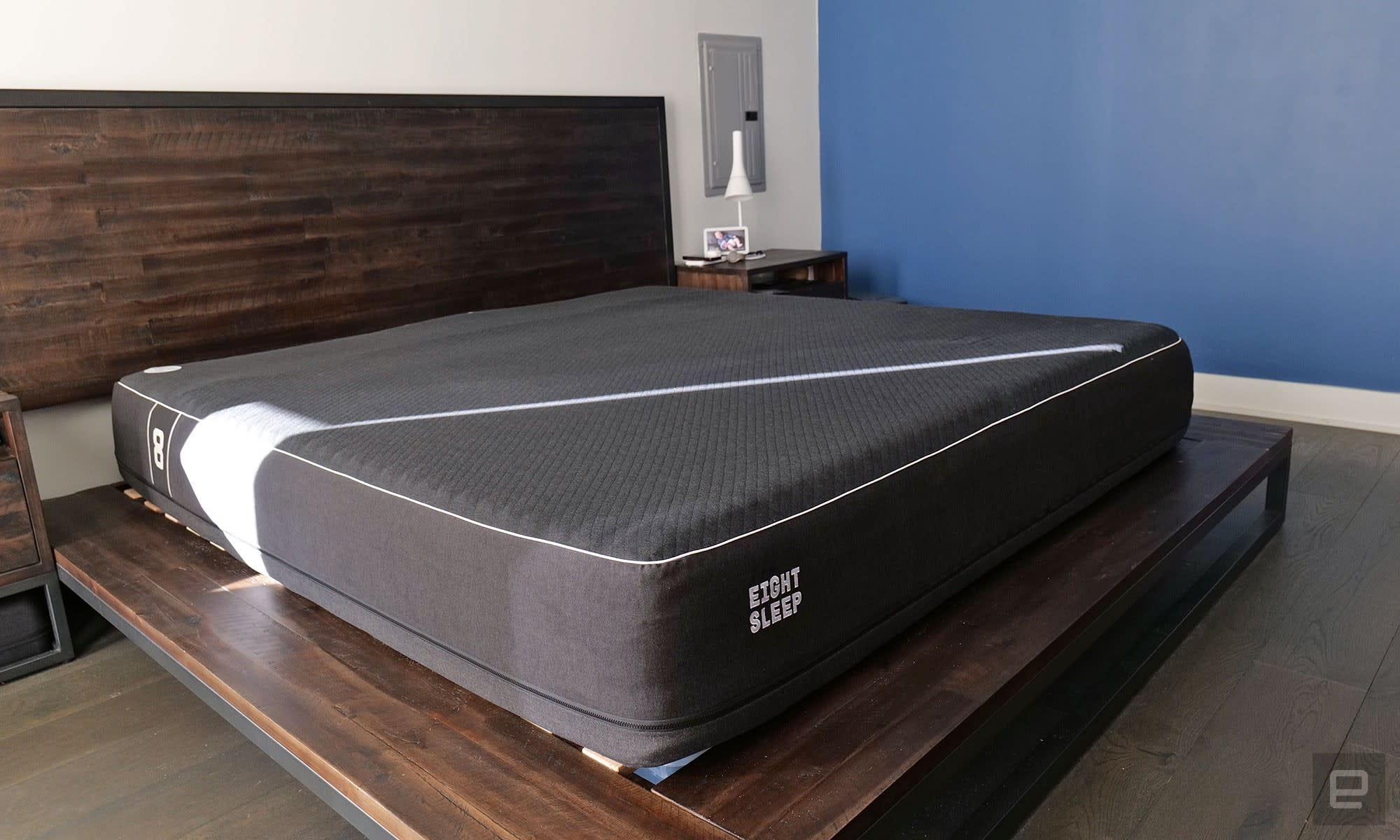
This $100 million Series D round included Sequoia China, Valor Equity Partners, Founders Fund, and YC, bringing Eight Sleep’s total funding to around $260 million.
Eight Sleep says revenue from the Pod has surpassed $500 million. Since launching in 2019, revenue has grown 10×, and they’ve collected over 1 billion hours of sleep data.
Although hardware products can be bulky, in the home setting—especially for sleep—they’re one of the best vehicles for collecting valuable sleep data. In my view, that data is the most valuable part.
Oura, the smart ring now valued at $5.2 billion, originally focused on sleep tracking. Its founder has said that targeting sleep helped them find a unique sweet spot within a specific customer base.

Now, with a vast dataset and real-world use cases, Eight Sleep is expanding its business with the Sleep Agent—an AI system powered by large language models.
It creates thousands of digital twins for each user to predict outcomes and optimize sleep quality. Co-founder and CMO Alexandra Zatarain said this approach shifts sleep tech from passive tracking to proactive, personalized intervention.
Eight Sleep also plans to accelerate its healthcare push, leveraging the Pod’s health monitoring features. With the new Health Check system, it can track cardiovascular and respiratory patterns with up to 99% accuracy—without wearables.
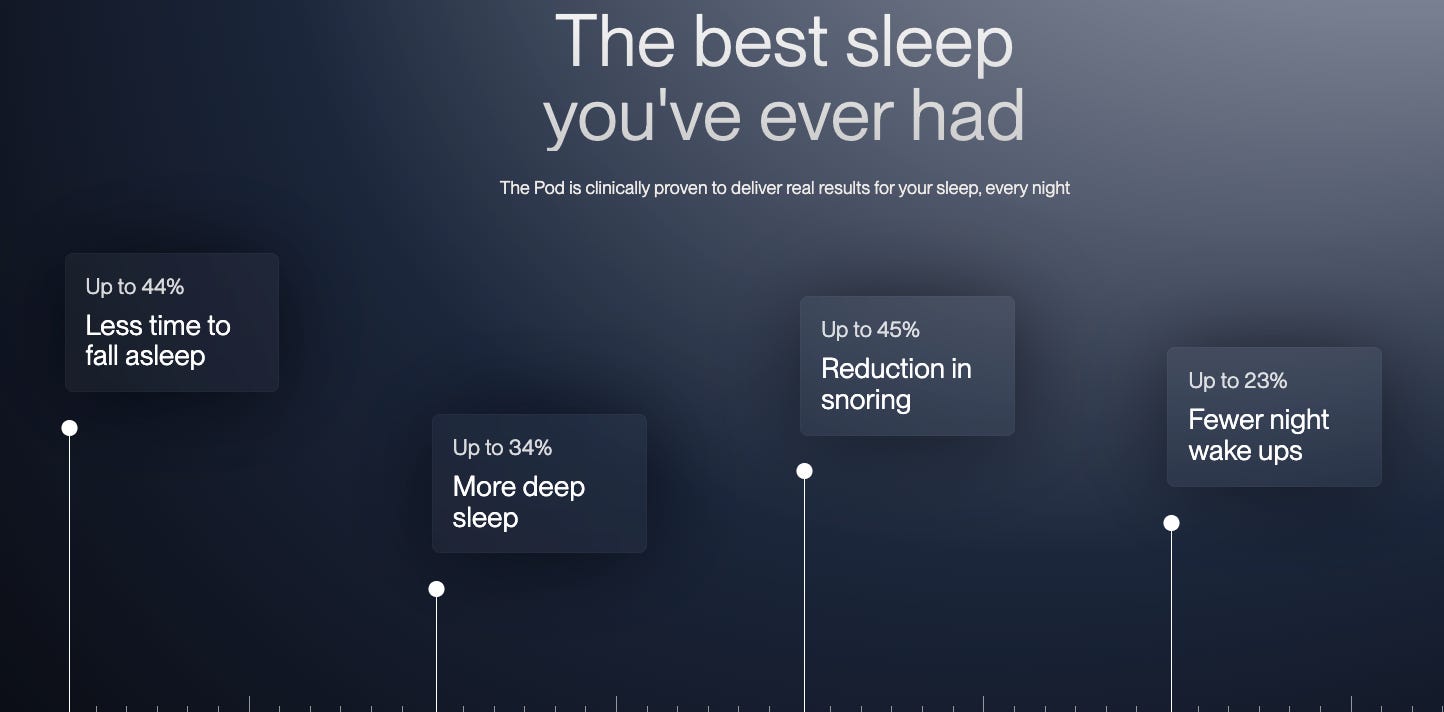
They stress this isn’t about replacing doctors, but providing nightly, high-precision health monitoring so users can act early when trends shift. Over time, this data can supplement clinical care.
It claims that Sleep has always been passive, and they’re now making it intelligent. Eight Sleep is becoming the operating system for sleep.
Eight Sleep currently ships to over 30 countries—including Canada, the UK and EU, Australia, Mexico, and the UAE—and now plans to expand into China. I suspect Sequoia China’s investment is tied to this expansion.
Zatarain noted that in China—one of the world’s largest consumer markets—they see a growing health-conscious middle class that prioritizes sleep and overall wellness.
However, this deal also reignited debate between Founders Fund partner Delian and Benchmark over investing in China. Delian has often criticized Benchmark for backing AI companies founded by Chinese entrepreneurs, such as Manus and HeyGen.
Today, Benchmark partner Chetan reposted Delian’s tweet, commenting that he’s a big fan of Eight Sleep and happy to see Delian’s views on Chinese VCs evolving. He pointed out that a Chinese VC (Sequoia China) led the round in a Founders Fund–backed company—asking whether this meant Delian had changed his stance (a bit of a clapback).
Chetan added that he believes many outstanding Chinese entrepreneurs exist, and Americans should do business with them. Likewise, if U.S. entrepreneurs want to work with Chinese investors, he sees no issue with that.
To me, the model of collecting real-time data from hardware and then applying AI for personalization is a compelling AI hardware strategy.